
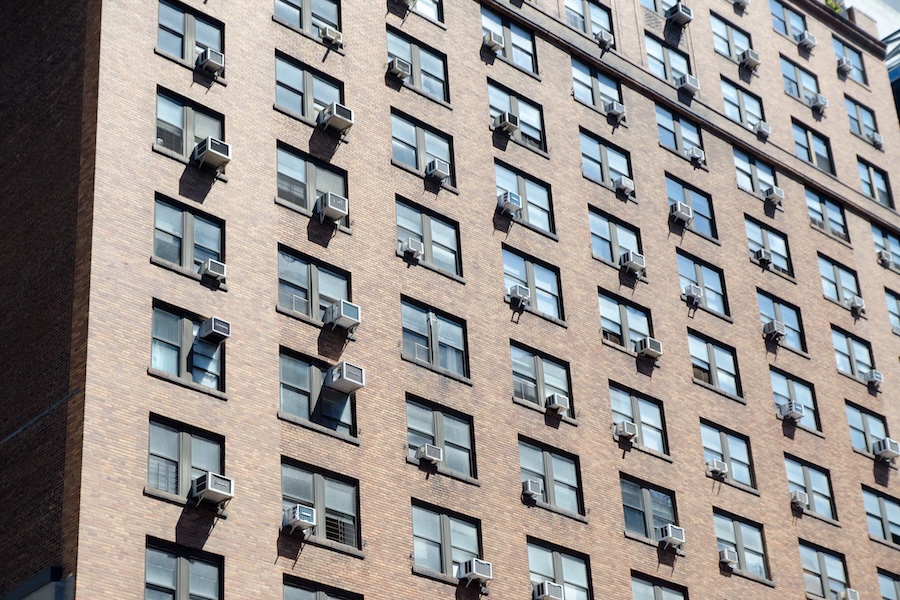
In addition to NYC’s existing “heat season,” city owners and managers now have to deal with new cooling season requirements and possible device installation at their properties.
A recent council bill focused on keeping residents cool passed in December 2025. That said, enforcement here is several years away – 2030, to be specific.
Here are the details from the council’s new law, and what we can expect in the coming years:
Cooling Device Requirements
Starting June 1, 2030, the owner of a covered dwelling unit “shall during the cooling season keep such dwelling unit equipped with 1 or more cooling systems capable of providing adequate cooling to each covered room in such dwelling unit.”
It’s important to note – this is a tenant-elected requirement. That means the tenant has the right to opt-in to having appropriate cooling systems. Tenants in rent regulated units would have to provide consent to “any improvements necessary for reasonably meeting this requirement,” as well as associated charges in a manner consistent with current law.
What is adequate cooling?
Cooling season is officially listed as June 15 – September 15. Compare that to the current heat season: October 1 – May 31.
“Adequate cooling,” as defined by the law is:
…cooling sufficient to maintain an indoor air temperature of no greater than 78 degrees Fahrenheit, measured at least 3 feet above the floor and at least 3 feet away from any exterior wall, provided that the department may adjust such requirement by rule if such indoor air temperature is not technologically feasible.
The measurement standards here are key indicators for where HPD agents would (or more specifically, would not) measure the temperature during inspections.
Covered Dwellings and Rooms
Buildings where this law applies include multiple dwellings, or a tenant-occupied 1- or 2-family dwelling (other than multiple dwellings used for emergency temporary housing by or on behalf of the city).
Specific rooms where this applies are “covered rooms” – a room in a covered dwelling unit which “either is known by the owner of such dwelling unit to be used as the primary sleeping place of a permanent occupant of such dwelling unit or is foreseeably used as the primary sleeping place of a permanent occupant of such dwelling unit.”
Condos and Co-Ops
Condos and co-ops aren’t specifically mentioned in the law, except in one area. The law specifies that owners of condos and co-ops are the unit owner and shareholder of record on the proprietary lease for the unit, respectively. Basically – units that are not owner-occupied would likely be covered under this law, with respect to providing notice to tenants and following up on opt-ins.
Buildings With Central Air/Owner-Controlled Cooling
The law provides that buildings where cooling is provided “via an owner-controlled cooling system,” must furnish cooling sufficient to provide covered rooms with adequate cooling.
How Do Tenants Opt-In?
The law says that tenants who elect to opt-in to this law can do so in a form and manner designated by the department. There aren’t any other details regarding electronic or written opt-in requirements for now. We’ll have to wait for HPD to clarify with rules and a process here.
The council did specify March 1, 2028 as a start date for opting in. That’s interesting for a huge reason – it’s the end date of the 2028 mailings season.
Per the law, March 1st is the date where owners provide DOHMH with details on non-responsive residents for annual mailings. That means it’s possible that cooling system opt-in questions may not be included with other optional mailing questions. Right now, owners can choose to ask residents questions about stove knob covers and FDNY Back-of-Door notices (in addition to the basic required lead paint, window guard, and safety information).
This date could also have nothing to do with mailings at all. That said, it’s worth paying attention to. If cooling system questions aren’t included as an option with traditional mailings, owners will have to find a separate way to collect this information from residents.
After Opting In
Generally (save any other provisions in the law), if a tenant opts in, owners must comply within 60 days of the opt-in date. One caveat – tenants in rent regulated units must have provided consent pursuant to the law. The department may also grant up to 2 year extension blocks (with renewals) if the owner can demonstrate undue hardship, or in other limited circumstances.
Additionally:
- No later than 10 days after receiving an opt-in election, the department shall inform the owner of the covered rooms subject to the requirement, and the date on which the requirement takes effect; and
- The department will provide a confirmation notice to the tenant that indicates key details, including possible increase to rent regulated units, and information regarding the circumstances under which a tenant may complain of adequate cooling
I read the above portion of the rule several times to be sure, but it’s clear: “…the department shall inform the owner…” Given that, it seems like the opt-in process may include HPD directly in some way. They’d have to have knowledge of a tenant opting in quickly in order to meet this timeline and deliver the tenant information.
Notice Requirements
While there are details to fill in on the opt-in process, owners do have information in the law on providing notice to tenants.
By January 1, 2028, the department shall make language available to owners informing tenants of the details in this law. That notice must be provided to tenants between March 1, 2028 and September 1, 2029, and posted within the same timeframe. This information must also be included in lease and lease renewal documents starting on 3/1/28, along with specifics on the party responsible for paying electricity costs of operating any cooling system furnished under the law.
Annual Inspections
Covered dwelling units under this law (opt-ins) must be inspected annually by owners starting June 1, 2031. Records must be kept in a form and manner approved by HPD.
What’s Next?
We expect HPD to release several rules in advance of the 2030 enforcement date, including:
- Details on approved cooling systems
- More information on the opt-in process
- How a presumption that “an approved cooling system is capable of providing adequate cooling to any covered room within such system’s cooling area” can be overcome
- Potential installation and maintenance standards
- Possible additional enforcement details – right now, owners would be liable for Class C violations with 14 day correction periods
The law is extensive – we recommend taking a look, and staying tuned to our blog and HPD news for more details in the coming years.
Related Articles

About the Author

